Carol Cleland rebuts Spacek's argument about uselessness of the term 'life' to astrobiologists. According to her 'life' is useful despite our inability to define it.
The NfoLD's White Paper on Standards of Evidence in Life Detection opened a discussion on this blog. In this piece Carol Cleland and David Grinspoon tear down Benner's "second example" of life.
Agnostic criteria, which are currently very popular among NASA scientists, are not truly agnostic and share many of the same problems with a definitional approach for searching for unfamiliar forms of life.
The problem with trying to codify an official protocol for recognizing biosignatures:
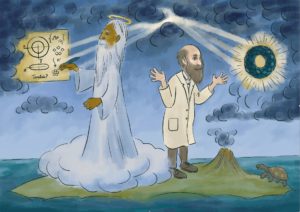
We can try to devise rules for how detecting alien life should unfold, but E.T. might not play along.
Synthetic biology, 20 years ago, taught NASA how to search generally, agnostically, and universally for alien life. NASA still does not understand the opportunity
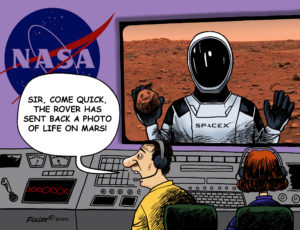
NASA gave up on looking for life on Mars, while planning to irreversibly biologically contaminate its surface. It is now up to private philanthropists to support life searching missions, while Mars is still biologically pristine. We know how to do it.
A couple of weeks ago a group affiliated with NASA released a “white paper” claiming that scientists need a universal biosignature detection framework for searching for extraterrestrial life.
Unfortunately, there is a serious problem with the first part of their proposal.
Before we go any deeper in the Universal Theory of Life debate we need to examine the following null hypothesis: ‘Life’ exists only as a concept. We mistakenly assume that 'life' exists independently of our culture as a natural phenomenon, just like we did with ‘luminiferous aether’, ‘preformationist’s homunculi’, and ‘vital force’. A theory of life is as useful as a theory of ‘phlogiston’.