The problem with trying to codify an official protocol for recognizing biosignatures:
We can try to devise rules for how detecting alien life should unfold, but E.T. might not play along.
NASA holds this week a workshop to consider looking (again) for existing life on Mars … but only 20 years from now. By then, humans may have been on Mars for a decade, thanks to Elon Musk, or (maybe) someone less interested in planetary protection. Thus, in 2042, detecting indigenous Martian life will likely be much more difficult. NASA will be too late.
A couple of weeks ago a group affiliated with NASA released a “white paper” claiming that scientists need a universal biosignature detection framework for searching for extraterrestrial life.
Unfortunately, there is a serious problem with the first part of their proposal.
Millan et al. just reported the discovery of benzoic acid in the dunes on Mars. Remarkably, benzoic acid was predicted 20 years ago to be on Mars as a product of organics falling to Mars via meteorite. And possibly ... life. Simply by understanding basic organic chemistry.
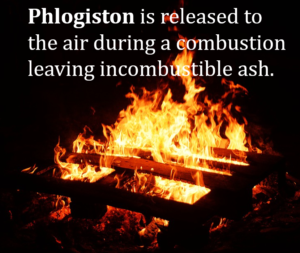
Before we go any deeper in the Universal Theory of Life debate we need to examine the following null hypothesis: ‘Life’ exists only as a concept. We mistakenly assume that 'life' exists independently of our culture as a natural phenomenon, just like we did with ‘luminiferous aether’, ‘preformationist’s homunculi’, and ‘vital force’. A theory of life is as useful as a theory of ‘phlogiston’.